What is a digital port environmental twin?
The digital port environmental twin virtually replicates real port operations. It links:
- measurement data on noise, air quality, and meteorology,
- information on operational processes, traffic movements, and occupancy of mooring places as well as
- model-based predictions of environmental impacts on adjacent residential areas.
This allows the effects of port activities to be simulated before they actually take place. Measures can be tested, evaluated, and optimized in a virtual environment.
More environmental protection through intelligent planning
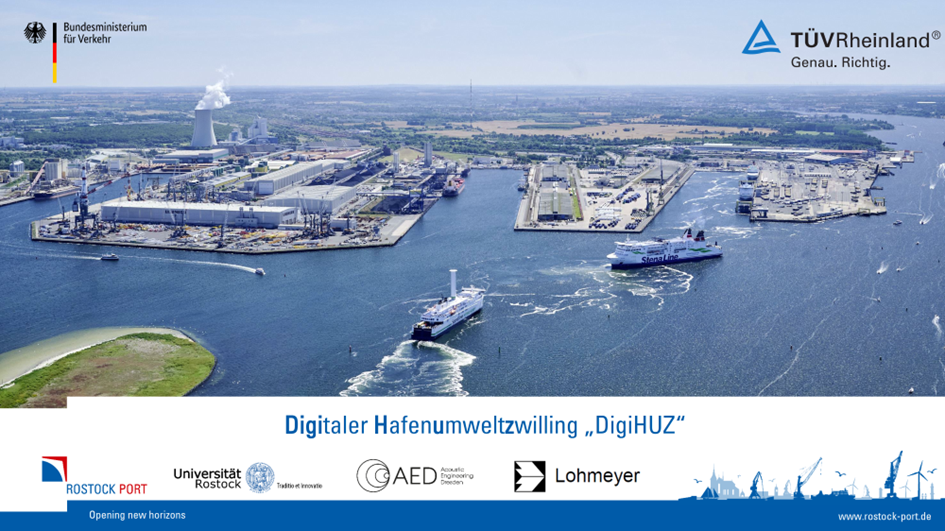
DigiHUZ focuses on the ferry and RoRo terminal at the seaport of Rostock. The digital twin enables:
- early detection of critical noise or air pollution,
- identification of the relevant emission sources as well as
- derivation of specific recommendations for action to reduce immissions by port operations.
This allows operational processes to be managed in such a way that legal immission limits are complied with, conflicts with neighboring residential areas are reduced, and the port’s performance is maintained at the same time.
Strong partnership for innovative port technologies
The project is coordinated by Rostock Port GmbH and implemented in collaboration with strong partners from science and industry:
- the Gesellschaft für Akustikforschung Dresden mbH (AED),
- the Lohmeyer GmbH as well as
- the Chair of Production Organization and Logistics at the University of Rostock.
Based on an existing digital environmental monitoring system with ten measuring stations, an innovative overall system is being created that can be transferred to other ports and industrial sites throughout Germany and, in the future, internationally.
Benefits for the port, the environment, and society
DigiHUZ represents an important step toward sustainable, digitally controlled port infrastructure. The digital port environmental twin:
- supports climate- and environmentally-friendly port development,
- strengthens the competitiveness of Rostock as a location,
- creates a transparent data basis for dialogue and acceptance as well as
- contributes to the future viability of modern ports.
The DigiHUZ project shows how digitalization, environmental protection, and economic success in port operations can be conceived and implemented together.